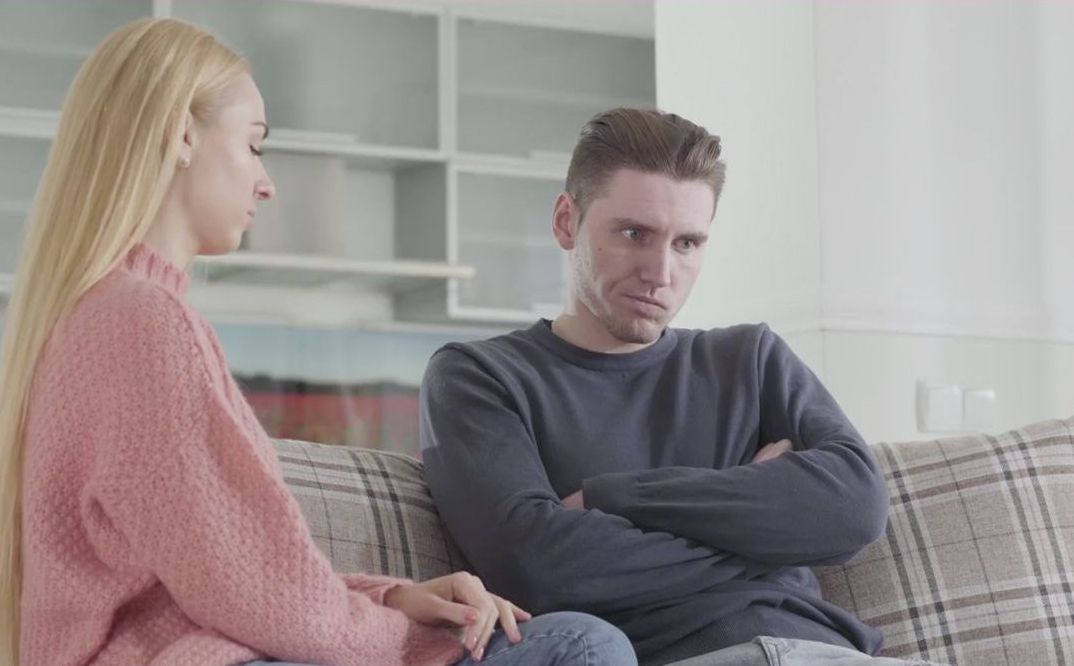
Understanding Avoidant Attachment in Relationships
Think you or your partner might have an avoidant attachment style?
Continuing with our overview of the attachment styles, this note teaches you the basics of avoidant attachment, what causes it and how it blocks healthy attachment.
Avoidants learn to deny their attachment needs for closeness, comfort and connection as children. When they become adults, they tend to deny their partner's attachment needs as well.
All of the attachment styles make sense when you understand the kind of family dynamics that produced that particular attachment style. I'll show you the kind of family culture that creates avoidant attachment and why avoidants learn to hide the vulnerable parts of themselves.
As children, avoidants are made to feel shame for their basic need to connect. Avoidants spend a lot of time alone as children and sometimes this even leads to attachment trauma.
And that's going to give you a huge leg up in improving your relationship.
In our last note, we talked about the ambivalent attachment style, and in this note, we're going to talk about the avoidant attachment style.
Avoidant Attachment Style
Now, it's not often avoidants are watching relationship writing. They're very wary of relationships and have a tendency to distance themselves. That's why they're called avoidants because they like to avoid social interaction, in general, and they prefer to be alone.
Very often people who are watching these notes are the partners of avoidants who are trying to figure their partner out.
So, if this is you and you think your partner might be avoidant or if you think you might be an avoidant yourself, this can be really useful information for you. Now, it's important that no matter what attachment style we're talking about, that we come at this with an attitude of compassion.
Because when you understand, for instance, what creates the avoidant attachment style, then you can understand why a person would become distancing and would prefer to be away from other people.
Avoidant Attachment Traits in Children
That's what we're going to be talking about in this note. In terms of the avoidant childhood, what happens is, avoidant children spend a tremendous amount of time alone, playing alone, and so they're really lacking in that early relational experience, that we talked about in the other notes, that children need.
That very direct face-to-face, eye-to-eye, skin-to-skin kind of contact, avoidant children don't get that. Often they're latchkey kids, or they're children who are expected, from a very young age, to pull themselves up by their bootstraps, kind of take care of themselves much earlier than a child should actually be expected to do that.
So, in avoidant families, there's a lot of shame for being dependent.
Avoidant parents don't want their children to be dependent. They want children who are successful and can look after themselves. The parents don't like to see sadness, or pain, or sickness, or hurt or any of those kind of vulnerable emotions. These feelings are not accepted by parents who produce children with avoidant attachment.
You can imagine how difficult, how stressful it is for a child to grow up in that kind of environment where they're not allowed to be needy, they're not allowed to be hurt, they're not allowed to be upset. Because all children have lots and lots of needs, all children get upset, all children have bad days.
And basically, in that family, children are given the message that those things are not okay.
As a result, avoidants develop a lot of shame, and they learn that they need to hide whole parts of themselves, whole parts of their experience, because they're just not acceptable to the parents, to the people around them.
Again, if you remember that attachment is about children orienting their behavior in such a way to get the maximum amount of responsivity and availability from their parent.
This is what a child needs to learn to do in that kind of family, is they need to learn to just say, "I'm good. I'm fine. I don't have any needs. Everything's perfect. I'm in control."
They learn to suppress those basic attachment needs to the point that they don't even feel those needs anymore themselves. So, for instance, if you look at avoidant children, let's say avoidant toddlers, you'll see that they look very calm and collected on the outside.
They're playing by themselves on the floor with toys, they don't look like they're under stress, they're cool as cucumbers.
But what we know from the research is that, if you do a stress test on these children, you see that their cortisol levels are off the charts, their hearts are pumping a mile a minute, but they don't show any of that stress on the outside.
Avoidant Attachment in Adult Relationships
Fast forward to adulthood, and the way that avoidant attachment creates problems in intimate relationships is, obviously, avoidants are very good at denying their own attachment needs.
As a result, they're also very good at denying their partner's attachment needs.
So they tend to feel very annoyed by any sort of need for contact, comfort, or soothing, reassurance, or self-esteem building. Any sort of dependency need that is expressed by their partner tends to really annoy them.
And they have this feeling like, "You should be taking care of that yourself."
Now, our culture, as a whole, is an avoidant culture. Western culture is an avoidant culture.
We have a cultural attitude that people should take care of themselves, dependency is a bad thing. And the fact is our culture has been going in the wrong direction with that for a very long time.
Our culture is very supportive of this way of being in relationship, this avoidant attachment style. But the problem is that it doesn't work in relationship because it's actually very threatening to be in a relationship where you're being neglected, where you can't rely on each other.
And so, what avoidant partners need to understand is where they come from.
And they need to understand the fact that they are dismissing these very basic healthy needs, and that their partner actually gets to have these needs from them.
It's very important that avoidants understand how afraid they are of their own dependency needs, that they're afraid to depend on anybody, and they're also afraid to have anyone depend on them.
In coaching, avoidant attachment is often one of the first patterns that shows up. A lot of times, when a couple starts talking, the distancing partner is blaming the other partner for being so needy.
So, that avoidant partner needs to understand that actually having needs is right and good.
All of these attachment needs that the avoidant's partner has from them are an expression of health. We want people to have lots and lots of needs in relationship, to increase the needs, and then get those needs met.
So it can be very difficult for an avoidant to come to open their mind to the fact that, "Hey, attachment needs are a good thing, and my partner has a right to need contact, and comfort, and connection from me, and that I need to start actually making pro-relationship moves. Getting out there, reaching out, hugging, kissing, finding my partner, and engaging with my partner is not only going to be good for my partner but it's also going to be good for me as an avoidant."
When couples really understand this, Couples often find this changes the dynamic.
It can change the whole dynamic for the better. Because, suddenly, this partner of the avoidant is able to start calming down because their partner, their avoidant partner is moving toward them, rather than away.
And, fundamentally, what makes relationships work is that couples turn toward each other, rather than away from each other.
Final Thoughts
So learning to turn toward each other, instead of away, is, in a nutshell, what helps a relationship last.
If you want to practice one piece of this, start with your coach. Love Lasts is coaching, not therapy. Nothing on this page is a diagnosis, and nothing here promises a particular outcome.
When you want to practice this in private, start with your coach.