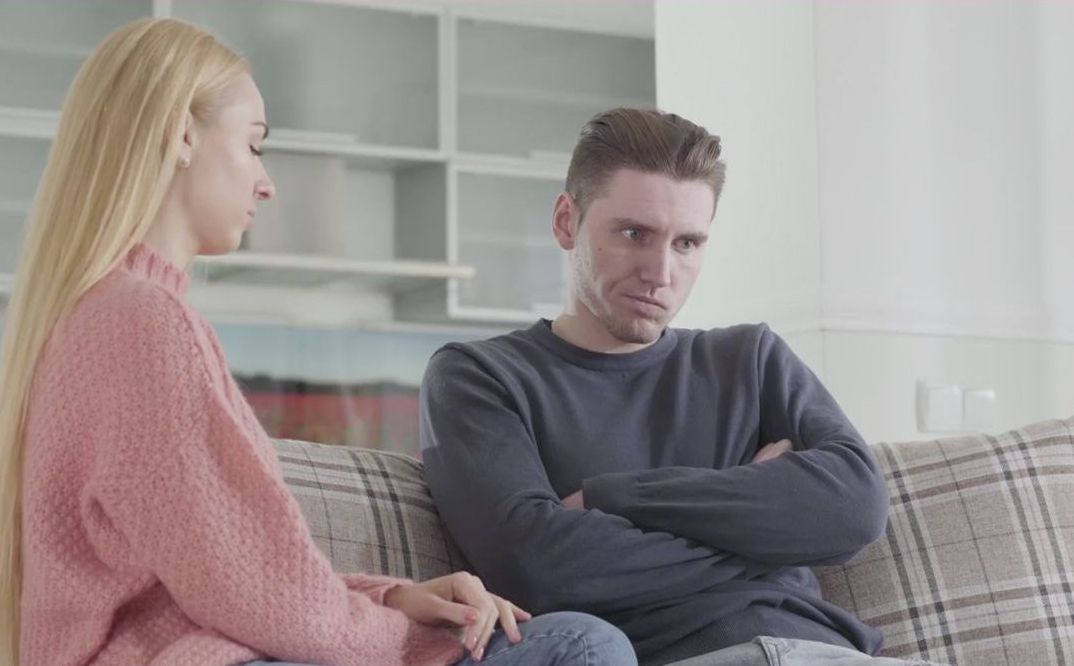
Emotionally Unavailable Men and Other Emotionally Unavailable Partners
People often search for this as emotionally unavailable men. The pattern is not limited to men. An emotionally unavailable partner can be any gender. What you feel is the same: you reach, and there is a delay, a joke, a subject change, or a wall.
This is a coaching note about the pattern. It does not label your partner with a condition, and it does not promise they will become available if you say the right sentence.
What the distance feels like
The logistics may be fine. You can pay bills, host a dinner, raise a child, or keep a calendar. Under that, you feel lonely in the same house. You ask how they are and get a task list. You are upset and they get irritated that you are upset. Plans stay vague. Affection shows up on their terms, then vanishes when the moment gets tender. You start working harder to earn a response that used to be simple, or that you hoped would become simple.
You may feel single while sharing a bed. Or you may be dating someone who is warm in texts and thin in person, who will not say what the relationship is, who treats a direct question as pressure. Both are the same ache: contact is scarce exactly when you need it to mean something.
Emotional availability is the other picture. You can find each other when one of you is hurt, bored, proud, or scared. That availability is part of what makes a relationship feel like a secure base. It does not mean you are fused, and it does not mean you may interrupt every hour of their life. It means that when something real is wrong, you are allowed to matter to each other.
People who feel safe depending on someone are often freer, not clingier. The myth that need is weakness is covered in dependency myths. Knowing the door is there lets you go out into your day with less brace. You are not cashing the favor in constantly. You are less alone.
Three differences worth naming
Distance versus closeness. An unavailable partner keeps a gap, physical or emotional, and treats closing it as optional. An available partner can enjoy being alone and still prefers to come back. Alone time is not the problem. Alone time as the only setting is.
Unclear status. Are you exclusive? Are you building something, or keeping it light forever? If you still cannot answer after you have asked in plain words, the fog may be doing a job. Fog prevents the kind of commitment that would make your needs legitimate.
Blame for having needs. Distress signals get called dramatic, needy, or badly timed. They do not pick up bids, and they do not make many. The message is that your inner life is your private problem, even inside a relationship that claims to be close.
These moves all protect against intimacy. Intimacy asks a person to be affected. If being affected once felt dangerous or useless, distance is a sensible old strategy. It is still hard to live beside.
Where it often starts
A lot of emotional unavailability is avoidant attachment in everyday clothes. As a child, needing people was unsafe, embarrassing, or pointless, so aloneness became the way to settle. Closeness in adulthood still trips the old alarm. A bid for comfort can feel like an intrusion, not like love.
Low-contact homes are a common version. Not much face-to-face warmth. A child expected to be fine too early. Parents who were overwhelmed, preoccupied, or simply not there. The child learns to manage energy from the inside, because the outside did not answer. That skill can look like confidence. It can also mean they do not notice your face change, because noticing faces was not how they survived.
Sometimes the distance is newer. Stress, grief, shame, or a fight with no repair can shut a person down who used to be reachable. Do not assume a single cause. Ask what is happening this month as well as what happened at age eight. A partner who is grieving is not the same as a partner who has never let anyone in, even if the feeling in your body is similar.
And sometimes you are the one who goes far away. The pattern is not a type of person you hunt. It is a dance. If you only study them, you will miss the step you keep repeating.
How to talk about it
Pick a calm moment, not the doorway as they leave, and not the minute they walk in from a hard day. Be specific. One event, one feeling, one request.
"When I told you I was scared about my job and you changed the subject, I felt alone. I need ten minutes where we stay with it."
"When plans stay maybe, I spin. I need a yes or a no by Thursday."
Then watch what they do with the request, not only what they promise. A partner who is willing can be clumsy and still turn toward you. A partner who mocks the need, or agrees and never follows through, is giving you information. One sincere evening is not a new personality. Look at the next few weeks.
Questions you can ask together, if they will sit for them:
- When one of us is in real distress, do we want to be reachable?
- Do important things get said, or only managed?
- Can we answer in the way the other person needs, even when it is not our own style?
- Is comfort part of the job of this relationship, or is each of us on our own?
If your answers do not match, you are not having a communication glitch. You are describing two different relationships. Someone caving so the answers match on paper is not a solution. Giving yourself away often starts right there.
If you pursue and they retreat
More pursuit usually deepens the retreat. The logic is painful and simple. They are in a settled, alone state. You arrive with a need. Their body reads intrusion. They freeze, joke, or leave. You feel the gap and move closer. They feel more intrusion. The evening ends with you ashamed of wanting anything.
A cleaner move is a clear ask, then room for them to come toward you. Cue them. Do not chase them through the house.
Cues are short and specific. "Come sit with me for ten minutes." "When the game is over, find me. I want to see you." "Put your arm around me." People who did not grow up with affection often feel lost about what "be close" means. A finite action has a start and an end. That can be less frightening than an open-ended talk about feelings that might never stop.
Transition time matters. If they are deep in work or a screen, "I need you in the kitchen right now" can feel like a grab. "Can you come in about ten minutes so we can talk about the house?" lets them finish the inner state and walk toward you. You asked. They move. That order gives them agency, which is often what the distance was protecting.
This is not a trick, and it is not your job to manage their nervous system forever. It is a way to stop making the exact move that slams the door. If they will not move toward you even when the ask is small, kind, and scheduled, you have learned something important. Do not add more pursuit to compensate.
Criticism makes this worse. "You never care" confirms the shame they already carry about being bad at closeness, and shame sends them further inward. Describe the moment. Ask for one action. Skip the character study.
The other side of the dance
The anxious side is often ambivalent attachment: hope, then the fear you will be dropped, then trying harder. You may love contact, talk easily about feelings, and still choose people who cannot meet you there. The chemistry can be the contrast. Their cool feels like strength. Your warmth feels like too much, to them and eventually to you.
Seeing both patterns lowers the blame. You are not foolish for wanting closeness. They are not a puzzle you failed to solve. You learned different ways to stay attached. Those ways collide.
You can also be the unavailable one and hate that this describes you. If bids feel like demands, if you need a long runway after work before you can be kind, if you keep the relationship undefined so you can leave in your mind, that is worth saying out loud. Your coach can help you practice a small move toward someone without agreeing to become a different person overnight. Small is the point. A text that answers the actual question. Ten minutes of staying with a feeling. A clear yes or no about the weekend.
If nothing changes
You can love someone and still need a relationship where feelings are allowed. If you have said what you need, in specific words, more than once, and the distance stays total, you get to decide whether this is the relationship you want. Wanting availability is not a flaw. Staying is not a moral duty. Leaving is not a punishment.
Be honest about what you would be choosing if you stay: a bond that is good at logistics and poor at comfort. Some people can live there, for a season or for good, if they are not lying to themselves about it. Many people cannot, and they spend years trying to earn a closeness that is not on offer.
What availability is not
Availability is not mind reading. You still have to say what you need. It is not a demand that someone drop work, sleep, or friendship every time you feel a flicker. It is not constant texting. It is not performing warmth you do not feel in order to keep the peace.
It is also not a personality transplant. A person who settles by being alone may always need a runway. The question is whether they will use the runway and then show up, or whether the runway is where the relationship lives. You can love a quiet person. You cannot build closeness only out of their recovery time if they never arrive.
A useful distinction: solitude that restores, and solitude that replaces you. Restoring solitude has an end. They come back a bit softer, and they can talk about where they were. Replacing solitude has no door. You are adjacent to their life, not in it. If you are unsure which one you are seeing, ask for a small return on a small timeline and watch.
Willingness, not a speech
Speeches are cheap because they happen in language, and language is where a lot of unavailable partners are already skilled. They can describe the childhood, agree with the article, and promise to be better, all without changing Tuesday. Willingness shows up on Tuesday.
Look for three ordinary proofs:
- They answer the question you asked, not a nearby easier question.
- They move toward you once, in the way you requested, without you repeating it all evening.
- They bring it up later themselves. "I noticed I left that talk. Can we finish it?"
If you get the speech and none of the proofs, believe the week. You can say, "I heard the intention. I still need the ten minutes we talked about." Then stop collecting new explanations. Explanations can become another way the distance stays interesting.
If the distance is yours
Read this as the other chair for a minute. Do people experience you as a wall? Do you feel accused the moment someone wants more than logistics? Do you keep relationships unlabeled so you can exit in your mind? Do you need so long to "come down" from the day that the evening is over before you are kind?
None of that makes you a bad person. It means your way of settling conflicts with the way a close relationship works. You can experiment without becoming someone else.
- Answer one vulnerable text with a real sentence, not a task.
- Set a timer for ten minutes of staying with their feeling, then you may stop. Finite is allowed.
- Say the status out loud: exclusive, not exclusive, or not ready to know. Fog is a choice too.
- Tell them when you need the runway, before they have to guess. "I need twenty minutes after work, and then I can talk."
Your partner should not have to become a detective. If the experiments feel impossible, that is information about how closed the system is, not a reason to shame yourself. Bring one experiment to your coach and practice the wording. Small, repeated moves change a pattern more reliably than a promise to be different by Friday.
A month, not a mood
Give a clear request thirty days if the relationship is otherwise respectful and you are not in danger. During that month, do not add new tests every few days. Repeat the same ask. Track what actually happens, in a few plain notes, so a sweet weekend does not erase three weeks of absence, and a bad night does not erase real effort.
At the end of the month, you will know more. They may be clumsy and genuinely turning toward you. They may be the same, with better language. You may realize you do not want this shape of love even if they improve a little. All three are usable answers.
Use the month to look at your own body, too. Do you sleep? Do you stop rehearsing conversations in the shower? Do friends get a version of you that is not only this worry? A relationship can be imperfect and still be a place you recover inside. If the month makes you smaller, more watchful, and more alone, that cost counts, even if they had two good weekends. You are not grading them only. You are noticing whether your life gets larger or narrower beside them.
If you share children, a lease, or a business, the decision can be slower without being vaguer. Slower means a timeline and a specific behavior, not an open-ended hope. "For the next month, we have one evening a week with phones down" is slower. "Maybe someday you will feel like talking" is fog. You can love someone and still refuse to live in fog. Your coach can help you hold the timeline when guilt tells you to drop it. Bring the calendar, not only the feeling. A date you can point to is harder to bargain away than a mood.
Clarity helps. It does not promise they will meet you. Practice the sentence with your coach before you say it at home. Bring the one request, not the whole history. Then listen to what they do, and let that answer count.
When you want to practice this in private, start with your coach.